
The 8 Unmistakable Signs Your Business Has Outgrown Traditional Signage and Needs Modular
why modular signage smartest investment growing brands India becomes obvious when a business keeps changing offers, departments, prices, branches, menus, tenants or product zones. Traditional boards work for stable businesses. Growing brands need signage that can adapt without looking patched, outdated or expensive every quarter.
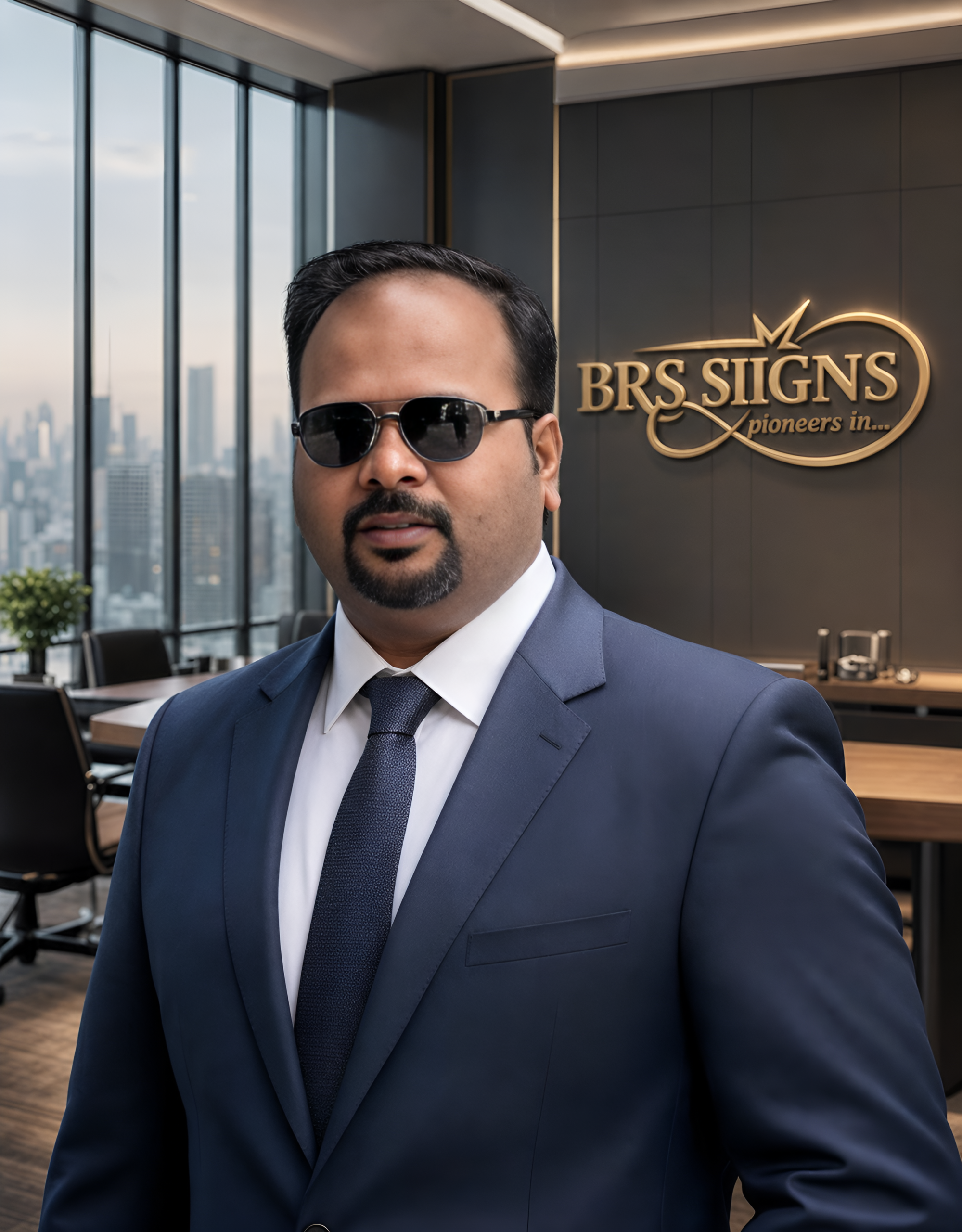
BRS SIIGNS identifies modular signage needs by checking update frequency, branch growth, customer confusion, remake cost, brand consistency and future expansion plans.
Quick Answer
Your business has outgrown traditional signage when signs need frequent updates, multiple branches look inconsistent, staff use temporary stickers, customers ask repeated direction questions, or every price/menu/department change needs a full remake. Modular signage fixes this through reusable structures and replaceable panels.
Why growing brands eventually outgrow traditional signage
Traditional signage is built for stable messages. Growth is not stable.
why modular signage smartest investment growing brands India becomes clear when signage information changes faster than traditional boards can be remade cleanly.
A traditional board works beautifully when one message remains unchanged for years. But growing brands do not stay still. They open branches, add services, change prices, launch offers, move departments, update menus and restructure store zones.
That is when old signage begins to crack. Not physically at first. Visually. A sticker appears. Then another. One branch uses a different font. A temporary print covers an old price. A floor directory becomes wrong. Customers ask staff for directions. The brand starts looking less organised than the business really is.
Modular signage solves this by making the core structure reusable. The frame, profile, backing, lighting and sign format stay stable. Only changeable inserts, panels, strips or printed modules are replaced. That is why Modular Signage System projects are especially useful for growing businesses.
Bennir Raja field note: The moment a business starts patching signs with temporary fixes, it has already entered modular-signage territory.
The 8 unmistakable signs your business needs modular signage
1. You update offers or prices too often
Retail, restaurants, supermarkets and service businesses change offers quickly. If every update needs a new board, modular panels or snap frames can save cost.
2. Your branches look different from each other
Growing brands lose trust when each branch has different signage sizes, fonts and finishes. Modular signage creates one repeatable standard.
3. Customers keep asking for directions
If visitors ask where billing, reception, pharmacy, lift, counter or department is, your wayfinding system needs upgrading.
4. Your signs have sticker patches
Sticker patches are early warning signs. They show that fixed boards cannot handle real business changes anymore.
5. New departments or tenants keep changing
Hospitals, corporate buildings and commercial complexes need signs that change with rooms, tenants, doctors and departments.
6. Menus or product categories keep expanding
Restaurants, bakeries and retail stores need replaceable categories, price strips and offer panels as product lines grow.
7. Remake cost keeps repeating
If your business keeps paying for design, print, fabrication and installation again, modular signage may reduce long-term spend.
8. Your brand now needs a premium system
At a certain growth stage, random boards damage perception. Modular systems make your business look organised, scalable and mature.
Traditional signage vs modular signage: honest long-term cost comparison
| Cost Area | Traditional Signage | Modular Signage | Smart Choice |
|---|---|---|---|
| First cost | Usually lower | Usually higher | Traditional if message never changes |
| Future updates | Often full remake | Panel or insert change | Modular for growing brands |
| Branch consistency | Can vary by vendor | Repeatable format | Modular |
| Wall damage | More risk during remakes | Lower if planned | Modular |
| Three-year ROI | Weak if changes are frequent | Strong when updates repeat | Depends on update frequency |
Traditional signage is not bad. It is simply wrong for businesses that change often. A fixed acrylic sign, ACP sign or LED sign is perfect when the message remains stable. But if your brand updates names, menus, offers, counters, services or branches every few months, modular signage can become a smarter investment.
For detailed price planning, read Modular Signage Price India 2026 and Aluminium Profile Modular Signs.
Which growing brands need modular signage most?
Retail chains
Retail brands need consistent offer boards, category panels, gondola signs and branch branding. See modular signage for retail chains.
Hospitals and clinics
Doctor names, departments, floor directories and room labels change. Modular systems reduce replacement mess.
Restaurants and cafés
Menus, prices, seasonal items and offers change often. Read modular menu display systems.
Corporate buildings
Floor directories, tenant names, meeting rooms and departments need clean future updates.
Exhibition brands
Brands attending expos need reusable displays. See modular exhibition displays.
Schools and colleges
Departments, blocks, labs, offices and wayfinding routes evolve as institutions grow.
Best modular signage materials for growing brands
| Material/System | Best Use | Update Value | BRS SIIGNS Advice |
|---|---|---|---|
| Aluminium profile | Directories, room signs, replaceable strips | High | Best long-term modular structure |
| Acrylic panels | Premium indoor branding | Medium | Great for reception and menu zones |
| ACP backing | Rigid large boards | Medium | Useful for larger systems |
| Snap frames | Offers and posters | High | Ideal for campaign changes |
| LED modules | Night visibility and highlights | Medium | Use where visibility justifies cost |
Good modular signage does not use one material everywhere. It uses the right material for each update pattern. A hospital room plate needs a different structure from a retail offer frame. A lobby directory needs different strength from a restaurant menu board.
Useful references include BIS, IS 9457 safety colours and signs, wayfinding, signage and information design.
How BRS SIIGNS upgrades traditional signage into modular signage
- 1Signage audit. We list every existing sign, location, size, purpose and update problem.
- 2Change-frequency mapping. We identify which information changes often and which brand elements stay fixed.
- 3Modular format selection. We choose profiles, snap frames, menu displays, directory boards, wayfinding systems or retail panels.
- 4Design standard creation. We create consistent fonts, colours, icon styles, panel sizes and branch-ready templates.
- 5Installation and replacement guide. We install the system and explain how future panels should be updated.
The goal is not to replace every sign blindly. The goal is to identify where modular signage creates real savings and where traditional fixed signage still makes sense.
Before and after: traditional patchwork vs modular signage system
Before: random boards, stickers and repeated remakes
The business adds signs whenever needed. Each board comes from a different moment, vendor or budget. After growth, the brand looks scattered, outdated and less premium than its service quality.
After: unified system with replaceable information
The brand uses one signage language. Fixed parts stay consistent. Changeable parts update cleanly. Customers understand faster and the business looks more mature.
Growth truth: A growing brand should not look like it is constantly repairing its own identity.
Growing brand case studies from Tamil Nadu signage projects
Retail brand stopped branch-by-branch mismatch
A growing retail chain had different sign styles across locations. BRS SIIGNS created modular category panels, offer frames and standard store branding for easier rollout.
Clinic reduced repeated room-board remakes
A clinic changed doctor names and consultation rooms often. Modular room plates and directory panels made updates clean without damaging walls.
Restaurant upgraded from sticker menu patches
A restaurant kept changing prices through stickers. A modular menu display with replaceable price strips made the counter cleaner and faster for customers.
For related reading, see lobby directory boards with modular panels, modular exhibition displays and modular menu display systems.
7 mistakes growing brands make before choosing modular signage
1. Comparing only first cost
Traditional signage often looks cheaper first. But growing brands should compare three-year update cost, not only day-one cost.
2. Updating signs without a brand standard
Every new sign should match one font, colour, size logic and material strategy. Otherwise growth creates visual chaos.
3. Making every sign permanent
Prices, names, offers, tenants and departments should not be locked into fixed boards if they change often.
4. Using cheap indoor material outdoors
Outdoor modular signs need weather planning, UV protection, drainage and strong fixing.
5. Ignoring installation access
Signs that are difficult to access become expensive to update later.
6. Not planning branch rollout
Brands opening more locations should design signage as a repeatable kit, not as one local board.
7. Waiting until signage looks broken
Upgrade before customers notice confusion, not after they start asking why signs look old.
Final checklist: does your growing brand need modular signage?
| Question | If Yes | Best Modular Fix |
|---|---|---|
| Do prices or offers change often? | Traditional boards become costly | Snap frames or replaceable panels |
| Do branches look inconsistent? | Brand trust weakens | Branch-ready signage template |
| Do customers ask directions? | Wayfinding has failed | Directory and arrow system |
| Do signs have stickers? | Fixed boards cannot adapt | Replaceable inserts |
| Is branch expansion planned? | Random signage will multiply | Modular signage kit |
| Does your brand need premium consistency? | System design matters | Aluminium profile modular signage |
If you answered yes to two or more questions, your business is probably ready for modular signage. If you answered yes to four or more, traditional signage may already be slowing your growth.
Useful business references include MSME India, Invest India, Make in India and India trade resources.
What growing Tamil Nadu brands say about BRS SIIGNS modular signage
“Our branches finally follow one signage standard. Updates became easier after rollout.”Mr. Ezhilarasan Manohar · Retail Brand
“Doctor-room changes stopped becoming a full signage remake problem.”Mrs. Kalaiyarasi Muthulingam · Clinic Admin
“BRS SIIGNS showed how modular panels could keep promotions reusable and clean.”Mr. Arulmozhivarman Sekar · Store Owner
Frequently asked questions about modular signage for growing brands
Modular signage is smart for growing brands because it keeps the structure reusable while panels, names, prices, departments, offers and locations can change without remaking the whole sign system.
The biggest sign is repeated signage updates. If your business keeps changing prices, offers, staff names, departments, tenants, menu items or branch layouts, modular signage can save time and money.
The first cost can be higher than basic traditional signage, but modular signage often saves money over time because only the changed panel or insert needs replacement.
Retail chains, hospitals, clinics, restaurants, corporate buildings, schools, malls, showrooms, hotels, food courts and multi-tenant buildings benefit most from modular signage.
A well-built modular signage system can last 5 to 12 years depending on material, location, maintenance and exposure. Inserts may change often while the main structure remains usable.
Yes. Modular signage helps growing brands use one signage standard across multiple branches, reducing mismatched boards and inconsistent customer experience.
Yes, modular signage can be used outdoors when weatherproof materials, suitable fixing, powder coating, drainage and print protection are planned correctly.
Yes. Restaurants benefit from modular menu displays because prices, combos, seasonal items and offers can change without remaking the full menu board.
Small modular panels can start around ₹850 to ₹2,800. Aluminium profile panels, directory boards, menu systems and full brand signage systems can range from ₹45,000 to many lakhs depending on scope.
BRS SIIGNS has 35+ years of signage experience, 16,000+ delivered projects and 100% in-house manufacturing. The team designs modular signage with durability, update flexibility, brand consistency and long-term ROI.
Build signage that grows with your business, not against it
Send your current sign photos, branch count, update problems, offer-change frequency and expansion plan. BRS SIIGNS will recommend whether modular signage, traditional signage or a hybrid system gives better ROI.
3, Guru Medical Hall, EVR Road, Puthur, Tennur Post,Tiruchirappalli, Tamil Nadu – 620017
+91 94867 50872 · brssiigns@gmail.com Get Free Quote Book Site Visit
Categories: Modular Signage Systems, Business Growth, Signage Strategy
Tags: why modular signage smartest investment growing brands India, Modular Signage India, Growing Brand Signage, Modular Signage Systems Tamil Nadu, Business Signage ROI, BRS SIIGNS Tamil Nadu
Related modular signage guides for growing brands
Modular Signage System
Explore reusable panels, directories and sign systems for growing business spaces.
Modular Signage Price India 2026
Understand per-panel and full-system pricing before budgeting.
Modular Signage for Retail Chains
Learn how growing stores keep branch branding consistent.
Modular Menu Display Systems
Update prices, offers and menu panels without full board remakes.
Lobby Directory Boards
Use modular panels for tenant, floor and department updates.
Modular Exhibition Displays
Reuse booth displays across expos, launches and dealer meets.